Why Midlife Weight Gain Is Not a Willpower Problem
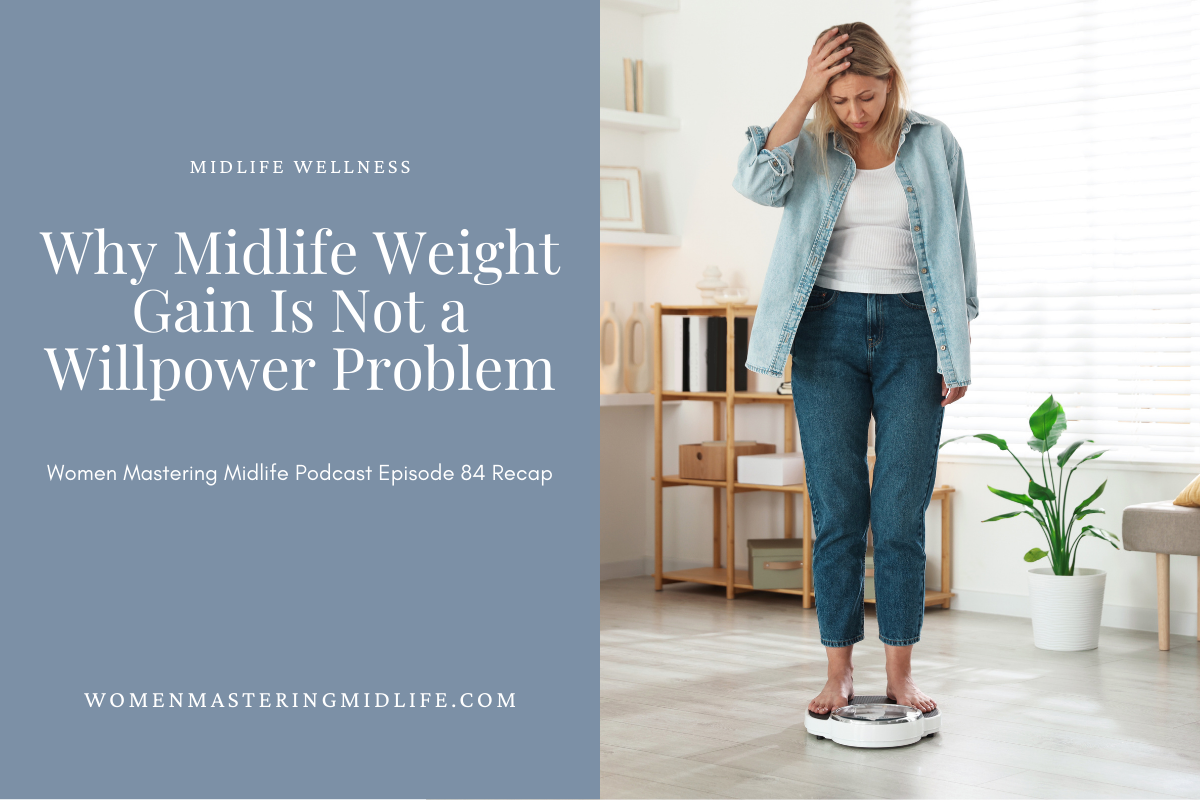
What Perimenopause, Insulin Resistance, and Belly Fat Really Mean for Your Health
If you feel like your body changed suddenly in your 40s or early 50s, you are not imagining it.
Many women reach midlife doing everything they have always done, only to watch the scale climb, their midsection change, and their confidence take a hit. The frustration can feel deeply personal, especially when old strategies no longer work.
Here is the truth that matters most: midlife weight gain is not a discipline problem. It is a biological shift that deserves understanding, not blame.
In a recent episode of the Women Mastering Midlife Podcast, I sat down with Heather Awad, MD, to unpack what is actually happening in the body during perimenopause and menopause, and why sustainable weight loss at midlife requires a different approach.
Listen to the full episode on Apple Podcasts
The Hidden Driver of Midlife Weight Gain: Insulin Resistance
One of the most important changes happening during the menopause transition is a rise in insulin resistance.
Insulin is the hormone responsible for moving glucose from the bloodstream into cells so it can be used for energy. As estrogen levels decline, insulin becomes less effective. The body compensates by producing more insulin, and chronically elevated insulin encourages fat storage while making fat burning more difficult.
This explains why many women experience:
Sudden weight gain despite unchanged habits
Fat accumulation around the abdomen
Difficulty losing weight even with calorie restriction
This is physiology, not failure.
Why Midlife Belly Fat Is Different
The abdominal weight gain many women notice in midlife is often visceral fat, which behaves very differently than subcutaneous fat.
Visceral fat surrounds the organs and is associated with:
Increased systemic inflammation
Higher cardiovascular risk
Greater risk of metabolic disease
Fat accumulation in the liver
This is why midlife weight conversations should focus on health outcomes, not aesthetics. Addressing visceral fat supports longevity, heart health, and metabolic resilience.
The Scale Is Not a Measure of Your Worth
One of the most powerful reframes discussed in this episode is separating self-worth from body weight.
The scale simply measures gravitational pull. It does not measure:
Your value
Your discipline
Your intelligence
Your capability
Weight loss and self-trust are two separate processes. You do not have to dislike yourself until you reach a goal weight. In fact, sustainable change often begins when women stop fighting their bodies and start working with them.
GLP-1 Medications: What Midlife Women Need to Know
GLP-1 medications like Ozempic and Wegovy are now part of mainstream weight loss conversations. These medications work by reducing appetite and quieting food noise through effects on the gut and brain.
What matters most is nuance.
These medications may be appropriate for some women, particularly those with long-standing metabolic disease. However, they are not automatically necessary for women whose weight struggles began primarily during perimenopause or menopause.
Key considerations include:
High out-of-pocket cost for many patients
Gastrointestinal side effects, including nausea and slowed digestion
High likelihood of weight regain without sustainable nutrition habits
Medication does not replace metabolic education, nutrition skills, or mindset work.
The Most Overlooked Midlife Strategy: Eating Enough at Meals
One of the simplest and most effective changes midlife women can make is eating complete meals instead of grazing.
A supportive midlife plate includes:
Protein at every meal
Vegetables or berries for fiber and blood sugar stability
Healthy fats for satiety
When meals are nourishing and sufficient, insulin levels have time to fall between meals, allowing the body to access stored fat for energy. This is metabolic support, not restriction.
Added Sugar vs. Carbohydrates: An Important Distinction
Midlife women are often told to fear carbohydrates, but the real issue is added sugar, which appears in the majority of packaged foods.
Fiber-rich carbohydrates like fruit, vegetables, and legumes behave very differently in the body than added sugars hidden in sauces, dressings, and convenience foods.
This is not about elimination. It is about awareness and intentionality.
Why Support and Community Matter in Midlife
Many women are trying to improve their health in environments that actively work against them: stressful jobs, family demands, and food-centric social norms.
Coaching and community provide:
Accountability
Shared language
Normalization of the midlife transition
Sustainable behavior change
Midlife health is not meant to be navigated alone.
A Message Every Midlife Woman Needs to Hear
Perimenopause and menopause are not the end of vitality. They are a recalibration.
Weight loss at midlife is possible. Feeling strong, clear-headed, and energized is possible. And it does not require punishing your body or living in restriction.
Your body is responding to hormonal change, not personal failure. With the right information, support, and compassion, sustainable change is well within reach.
Want to go deeper?
Listen to the full conversation on Spotify Podcasts