Ultra-Processed Foods, Metabolic Health, and Midlife: How to Eat with More Clarity and Less Confusion
Why Ultra-Processed Foods Matter More in Midlife
If you’ve ever felt like what used to “work” with food no longer does, you’re not imagining it. During perimenopause and menopause, shifts in insulin sensitivity, inflammation, and hormone signaling can make nutrition feel more complicated and far less forgiving.
In a recent episode of Women Mastering Midlife, I sat down with Julie Ruelle, RD, a registered dietitian with over 20 years of experience in clinical nutrition and metabolic health, to unpack why ultra-processed foods play such a significant role in midlife health and what women can realistically do about it.
Julie currently works with the GoCoCo app, a nutrition education tool designed to help people reduce reliance on ultra-processed foods through awareness and informed choice rather than restriction.
Processed vs. Ultra-Processed: An Important Distinction
One of the most helpful clarifications Julie shared is that not all processing is harmful.
Processing can include freezing vegetables, fermenting yogurt, or turning wheat into flour. These methods help preserve food, improve accessibility, and support a stable food supply.
Ultra-processed foods, however, are different. These foods are typically engineered rather than grown and contain additives such as dyes, stabilizers, emulsifiers, and flavorings that are not commonly found in a home kitchen. The body does not metabolize these ingredients efficiently, which is where health concerns arise.
How Ultra-Processed Foods Affect Metabolic Health
Ultra-processed foods impact metabolic health in several important ways, particularly for midlife women:
• Rapid blood sugar spikes followed by crashes
• Increased insulin demand and rising insulin resistance
• Chronic, low-grade inflammation
• Disruption of gut health and nutrient absorption
During midlife, when insulin sensitivity may already be shifting, these effects can feel amplified and show up as fatigue, brain fog, weight changes, and mood instability.
Reading Nutrition Labels Without Overwhelm
Rather than focusing only on calories, Julie recommends a practical and sustainable way to read food labels:
Start with serving size
Many foods that appear to be single-serve actually contain multiple servings.
Look at added sugars
Naturally occurring sugars from fruit or dairy are different from added sugars, which ideally should be kept as low as possible.
Pay attention to fiber quality
Fiber is most beneficial when it comes from whole foods rather than added isolates.
Read the ingredient list
If most ingredients are unfamiliar or difficult to pronounce, that often signals ultra-processing.
This approach supports metabolic health without encouraging restriction or perfectionism.
Small, Realistic Swaps That Actually Stick
Progress matters more than perfection. Instead of changing everything at once, Julie suggests starting with daily habits that offer the biggest impact:
• Making coffee at home using real vanilla and cinnamon instead of flavored syrups
• Choosing protein bars made from simple, whole-food ingredients
• Replacing flavored yogurt with plain yogurt plus fruit or vanilla extract
• Reducing sugary beverages, which are often the fastest way to improve energy and blood sugar balance
These shifts are practical, time-efficient, and supportive of long-term health.
Nutrition, Gut Health, and the Midlife Brain
Food quality affects more than weight. It plays a role in mood, cognition, hormone metabolism, and sleep.
Ultra-processed foods can contribute to blood sugar swings that drive energy crashes and cravings, while whole foods rich in fiber, protein, and healthy fats support a more stable gut-brain connection.
A healthy gut supports nutrient absorption and estrogen metabolism, both of which are increasingly important during the menopause transition.
How the GoCoCo App Supports Informed Food Choices
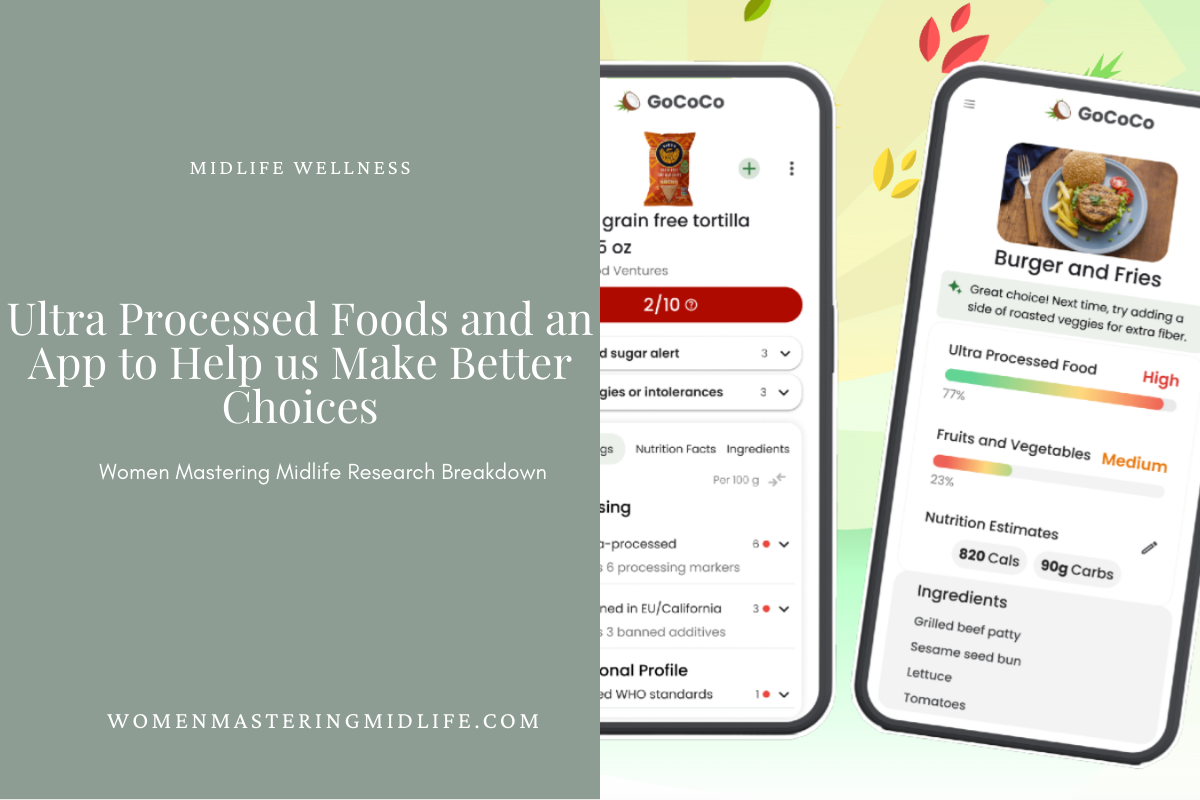
The GoCoCo app helps users identify ultra-processed foods and make better swaps without calorie tracking.
Key features include:
• Barcode scanning with a food quality score
• Identification of ultra-processed ingredients and additives
• Healthier swap suggestions within the same food category
• Photo-based meal analysis showing real food versus ultra-processed percentages
Many users find it particularly helpful for managing insulin resistance, prediabetes, and blood sugar awareness.
Free Premium Access for Women Mastering Midlife Listeners
Listeners of Women Mastering Midlife can receive one full year of GoCoCo premium access at no cost.
How to access the offer:
Download the GoCoCo app from the App Store or Google Play
Select the premium version
Use code WMML
This unlocks unlimited scanning, meal analysis, and educational tools designed to support metabolic health through clarity, not restriction.
Final Takeaway
Midlife nutrition does not require perfection, deprivation, or obsessive tracking. It requires clarity, quality, and realistic tools that support informed decisions.
Reducing ultra-processed foods, even gradually, can meaningfully improve energy, metabolic health, gut function, and overall well-being. As this conversation highlights, focusing on what to add rather than what to eliminate is often the most sustainable path forward.
To hear the full conversation, listen to the complete episode of Women Mastering Midlife wherever you get your podcasts.